

Defining Your Business for Success
Creating a business is not just about products and customers. Like any good thing it needs a name: a name that will represent what your business stands for and can be recognised in the market as a leader in its field.
But what is in a name? The first sentence we ask of our clients is to define the Purpose of the business. This is so much more than just making money and paying the bills. We will expand more on this in tomorrow’s post.
We also need to add to our business with a good name and logo. This is always one of the hardest issues when starting a business. Not only do you have to find a good name, but then to register this in the CIPC but also find a good URL for your website and then to register the same on all the required social media platforms all becomes a huge undertaking.
Having a good name and purpose is still not enough. These all need to be backed up by a well defines Vision, Mission and a set of defined company values.
Once all these have been written and edited to completion your business will begin to develop a live of its own guided by all of the above. Staff, suppliers and customers will begin to develop their own interaction behaviours with your business based on how it is defined and so your business will develop. Without one or more of the above, your business will have to rely on you at all times to define it with each interaction you have with others and as your mood changes, so will the perception of your business.
Spend some time this week defining your business for success. We will expand on each of these during the week on our blog and related social media platforms.
Product Features and Benefits
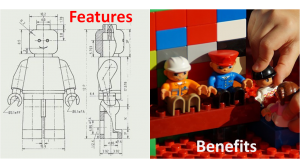
Too often we get this wrong. We do not distinguish between the product features and benefits in our marketing materials. Technical focused business owners and product developers seem to be so focused on the design on the product (and rightly so) that we forget to focus on the benefits to the customers.
So what need to be done about this? What can we do to improve our communication to the customer and get the balance right. The simple answer is to hire a marketing consultant or staff member who will help draft product specification sheets and web copy with all the right words and terms.
But actually, all that is required is to listen o your customers. Ask the right questions and begin to understand their needs and wants. Then just be addressing these, you automatically begin to talk product benefits and not features.
Remember that the customers do not care about how much you know, they need to know how much you care first.
#90DayBizSprint
What’s your Product Offering
Delivering a well-presented product offering to your customer base is key to business sustainability. This seems basic but so many business owners do not understand the importance of this and get it wrong in so many ways.
Your product should be not only well designed but also well described. Described in terms of features, benefits, and related supply chain. All these attributes define your product and should be used in the correct way in the correct place to communicate the correct message.
Getting this right is what this week is all about and should prove informative and business changing for you.
Join us on this 90-day business sprint this week as we speak all thing product. #90DayBizSprint
Finding new customers for your business made easy
Finding new customers is one of those activities that should occupy 80% of a business’s time and effort. But retaining customers is just as important and should also occupy 80% of resources. This short video in an extract from Geoff Ramm’s keynote speech on Customer Service that he delivers across the globe each year. (Video courtesy of Unique Speakers Bureau)
Keeping customers is key, but finding them is priority. There are three types of customers: existing, new and conversion. Each group needs to be treated differently and each will need a new set of processes and strategies to cope with their needs.
New clients are the hardest to attract. They will require the full sales cycle of processes. This will include a series of Inform sessions where you need to create an awareness of their problems and potential solutions (including your product). This is followed by a series of educational interactions. This converts the initial need into a want for the potential clients and will lead them, to the next step: the purchase.
Following this, they need to be looked after and channelled to the up-sell and re-sell processes. Simple, yet most businesses get this so wrong and make it too complicated that not only do the customers not understand it but the staff are just as confused.
Get this right and your business will grow. #90DayBizSprint
Who are your Customers?
This week in the 90 Day Business Sprint we look at our Customers. This word should always be spelt with a capital ‘C’ to show how important they are to our business. They are, after all, the ones who pay our salaries.
We have 3 types of customers:
Existing Customers: the people or businesses who are already an existing customer and who purchase from us on a regular basis.
New Customers: the people or businesses who do not yet spend money with us. These are the ones we need to attract and develop new relationships with.
Conversion customers: These people or businesses who shop at other businesses for the same or similar product offers as yours. These are the ones we need to attract and convert.
Each customer base needs a different strategy and set of marketing materials in order to build and deepen that relationship.
This week, we will begin to explore this and look at some tools to build solid, long term and profitable relationships with our customers.